
Field evidence for the people who run social audits, not a replacement for them
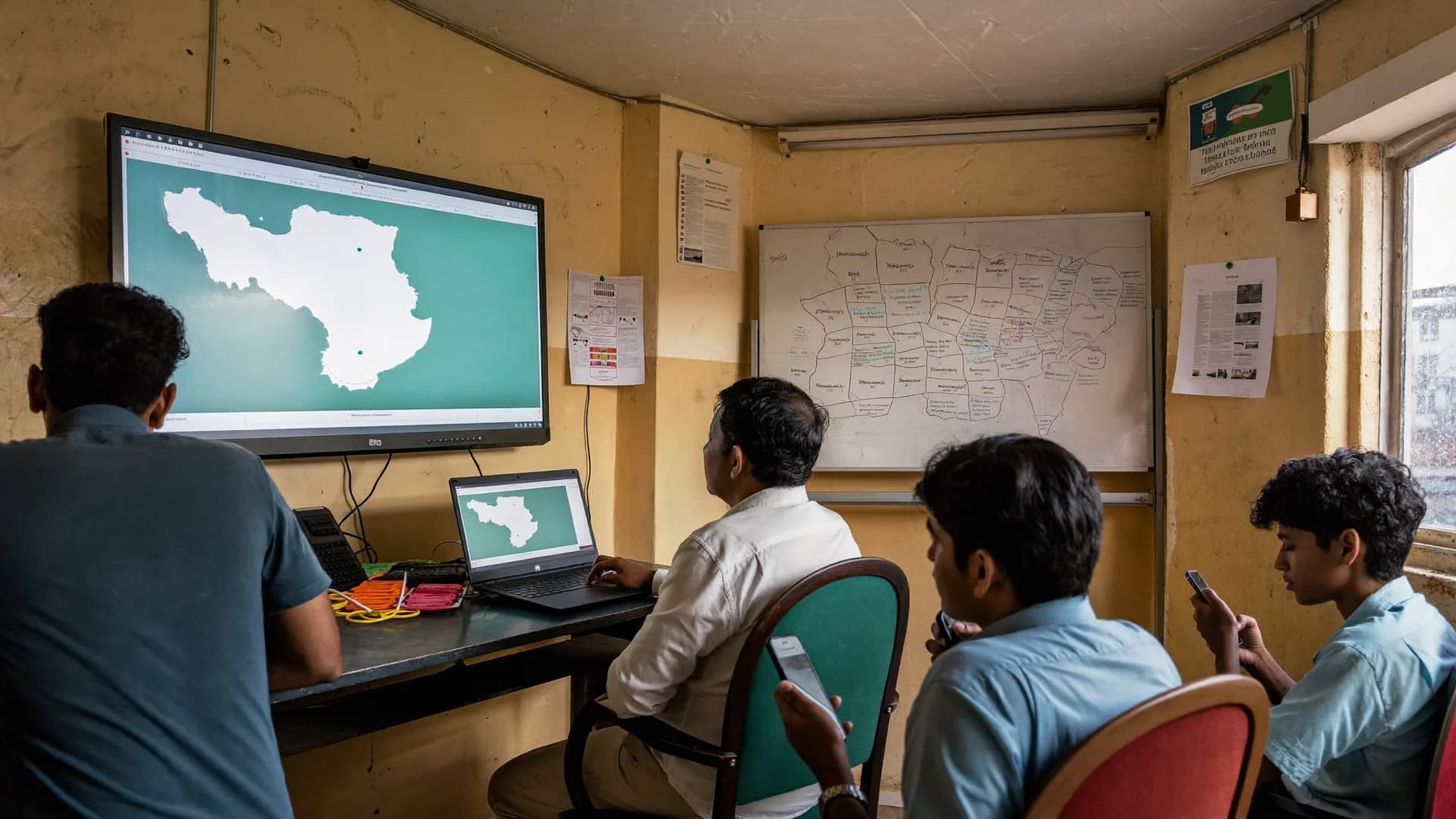
Bharat Survey works as a social audit agency in India in a support role: we supply the survey software, training and optional field data collection that State Social Audit Units, departments and civil society partners use to verify works, beneficiaries and payments before a gram sabha. The audit itself belongs to the community and the independent audit unit. Our part is making sure the evidence they carry into the hearing is complete, located and hard to dispute.
- Works verification with GPS and photos
- Door-to-door beneficiary checks
- Offline app for villages with no network
- Findings summary ready for the gram sabha
A social audit is a public verification of a government programme by the people it is meant to serve. Records are read out, works are physically inspected, beneficiaries are visited, and findings are discussed openly in the gram sabha. The best-known legal basis is Section 17 of the Mahatma Gandhi National Rural Employment Guarantee Act, 2005, which requires the gram sabha to monitor works and conduct regular social audits, with detail in the Audit of Schemes Rules, 2011.
Those rules place the process with an independent Social Audit Unit set up by each state, separate from the implementing department. Social audits are also used for other programmes, including housing, food security and school meals, depending on state orders. A private company cannot be the auditor. What it can do is provide tools, training and verified field data to the people who are.
Typical records verified
- Job cards and registration
- Muster rolls and wage payments
- Work files and measurement books
- Asset existence and quality
- Beneficiary lists
- Material purchase records
Four jobs in a typical audit round where a structured, offline survey tool saves days and prevents lost paper.
Physical verification of works
Resource persons open the work record in the app, walk to the site, confirm it exists, record measurements and condition, and take photos that store GPS and time automatically.
- Work ID pre-loaded
- Photos with location
- Condition checklist
Door-to-door muster roll checks
Households named on muster rolls are visited to confirm whether they worked, for how many days, and whether wages reached them. Discrepancies are recorded against the roll line, not in a notebook.
- Days worked vs recorded
- Payment received
- Consent recorded
- Comes regularly
- Comes sometimes
- Rarely / never
- Don't know
Grievances captured on the spot
Complaints raised during visits are logged with category and location so the audit report and the grievance register start from the same list.
- Categorised grievances
- Linked to panchayat
- Exportable list
Summary ready for the gram sabha
When teams sync, findings roll up by panchayat: works verified, discrepancies, amounts in question, grievances. A printable summary goes to the hearing.
- Panchayat roll-up
- Printable summary
- Evidence links
Village resource persons do the hardest part of a social audit. The tool has to fit them, not the other way round.
Short, local-language training
Pre-loaded village packets
Supervisor review each evening
Clean hand-over
Our position
Paper-based round
What most teams know
- Formats copied by hand in each village
- Photos on personal phones, no location
- Findings typed up days after the hearing
- Hard to compare panchayats
- Records lost between rounds
Structured round
With an offline survey app
- Records pre-loaded per panchayat
- Photos carry GPS and time automatically
- Summary available the evening teams sync
- Same format across every panchayat
- Evidence kept for the next round
| Option | What we provide | Who runs fieldwork |
|---|---|---|
| Software only | Offline survey app, web panel, form setup, training of trainers | SAU resource persons |
| Software + field support | Everything above plus field supervisors during the round | SAU resource persons with our supervisors |
| Independent verification survey | Our field teams run a sample verification alongside the audit, reported separately | Bharat Survey field teams |
Pricing is on quotation and depends on panchayats, round length and whether field teams are needed.
Not the right fit if
- The statutory Social Audit Unit or its replacement
- A chartered accountant for financial audit
- An agency that conducts gram sabha hearings
- A substitute for community participation
A good fit if
- SAUs that want offline digital verification
- Departments adding GPS and photo evidence
- Civil society partners training resource persons
- Independent sample checks of audit findings
Government solutions
Scheme verification, household and facility surveys.
Learn moreसरकारी सर्वे (हिंदी)
Government survey services in Hindi.
Learn moreThird party evaluation
Independent evaluation of scheme outcomes.
Learn moreGeM procurement
How departments procure survey services.
Learn moreEmpanelment
What empanelment processes usually ask for.
Learn moreStraight answers to the questions people ask most about this topic.
Can a private agency conduct a MGNREGA social audit?
No. Under the Audit of Schemes Rules, 2011, social audits are facilitated by an independent Social Audit Unit set up by the state, and conducted with the gram sabha. A private agency can supply software, training or independent verification surveys that support the audit.
Does the app work in villages without mobile network?
Yes. Work lists, muster roll lines and forms are loaded before the team travels. Resource persons collect everything offline, including GPS-tagged photos, and data syncs when the phone reaches network.
Which languages are supported?
Forms are Hindi-first and can be set up in the regional language used by the resource persons. Question text, options and help notes are translated and checked in a pilot village before the round.
Can findings be exported to our existing reporting system?
Yes. Findings, photos and grievances export as structured files with panchayat and work codes, so the Social Audit Unit can load them into its own MIS or reporting formats.
Tell us the programme, number of panchayats and the round dates. We will suggest a setup and share a quotation.