


Third party verification tender
Continuous- In areaInside approx. boundary
- Accuracy±12 m
- Time09:42 · fresh fix
- Mock GPSNot detected
- Interview length11 min

Portals, bid security, eligibility, QCBS and the clauses that disqualify bidders
This survey tender India guide is for research agencies, NGOs and consultants bidding on government survey and evaluation work, and for officials drafting the documents. It explains where tenders are published, what bid security and performance security mean under GFR 2017, how eligibility and QCBS scoring work, and the mistakes that get technically sound bids rejected.

Central ministries and their bodies must publish tender enquiries, corrigenda and award details on the Central Public Procurement Portal under Rule 159 of GFR 2017. Common-use goods and services available on the Government e Marketplace must be bought through GeM under Rule 149. States, PSUs and municipal bodies also use their own e-procurement portals.
The Central Public Procurement Portal (eprocure.gov.in) lists central tenders and links to many organisations' e-procurement systems. GeM (gem.gov.in) runs bids and reverse auctions for services that have a catalogue category. Most states run NIC-based or their own e-procurement sites, and large departments, universities and PSUs often publish on their own websites too. Development agencies and CSR foundations issue RFPs by email lists and on their websites.
Before downloading the full document, note the bid submission date, the pre-bid meeting date, bid security, minimum turnover, similar-work requirement and evaluation method. Those five lines tell you in minutes whether a survey work tender is worth a week of proposal writing.
A socio economic survey tender usually runs to dozens of pages. Read it in this order so disqualifying conditions surface before you spend time on methodology.


A data collection survey tender normally tests three things before looking at methodology: financial capacity through turnover, similar work through completion certificates, and integrity through declarations on blacklisting and conflict of interest. A bid that misses one required document is usually rejected without its technical proposal being scored.
Buyers set a minimum average turnover over a stated number of financial years and ask for audited accounts or a chartered accountant's certificate. Similar-work clauses often ask for a number of completed assignments of a stated value or sample size. Read whether ongoing work counts, whether work for private clients counts and whether consortium partners' credentials can be combined. Some central tenders relax turnover and experience conditions for startups and micro and small enterprises; the document states when this applies.
Almost every bid asks for a self-declaration that the bidder is not debarred or blacklisted. Rule 151 of GFR 2017 covers debarment from bidding, and false declarations can themselves lead to rejection and debarment. If your organisation has any past dispute, disclose it as the document asks rather than relying on it not being found.
Rule 170 of GFR 2017 says bid security (EMD) should ordinarily be two to five percent of the estimated value, and allows a bid securing declaration instead in many cases. Enterprises registered under the Public Procurement Policy for Micro and Small Enterprises are generally exempt from EMD. After award, Rule 171 requires performance security; its percentage range has been amended in recent years, so the RFP's figure is what counts. Treat the performance security deposit market research contract clause as a cash-flow item: it is held until obligations are complete.
An impact evaluation tender for consultancy work is often evaluated by quality and cost based selection. The technical and financial bid market research agencies submit are opened separately: technical proposals are scored first, only those above the minimum qualifying mark have financial bids opened, and scores are combined by the stated weights.
| Method | How the winner is chosen | When buyers use it |
|---|---|---|
| QCBS (GFR Rule 192) | Weighted technical and financial score, weights stated in the RFP (for example 70:30) | Evaluations and studies where quality matters most |
| Least cost (L1) | Lowest price among bids that pass technical qualification | Standard, well-defined data collection |
| Fixed budget | Best technical proposal within a stated budget | Clearly defined assignments with a set amount |
| Single source | Direct selection with recorded justification | Exceptional cases defined in the rules |
| GeM bid or reverse auction | Price-based after technical compliance on GeM | Services with a GeM category |
The procurement method is stated in the notice. Methods and thresholds are set out in GFR 2017 and the Department of Expenditure's Manual for Procurement of Consultancy and Other Services.
A baseline survey tender typically asks for indicator definition, a sampling design with a comparison group where needed, tools in local languages, trained field teams, verified data and a baseline report. Many buyers expect the same agency or an agreed protocol to allow a later endline, so they score continuity and documentation.
Development agencies often describe the role as a baseline survey consultant RFP, where a firm or individual leads design and analysis while a separate data collection partner handles the field. Read the team section carefully: named key experts, their CVs and minimum years of experience can carry a large share of technical marks, and replacing them after award may need approval.
Where a buyer asks for an impact assessment study and SROI RFP response, confirm what social return on investment means to them. Some want a full financial proxy model, others a simpler value narrative. Ask in the pre-bid meeting rather than guessing, because the difference changes effort and team.
Monitoring and evaluation tender India buyers issue range from one-time studies to multi-year contracts. The type decides team, cash flow and risk, so classify each notice before bidding.
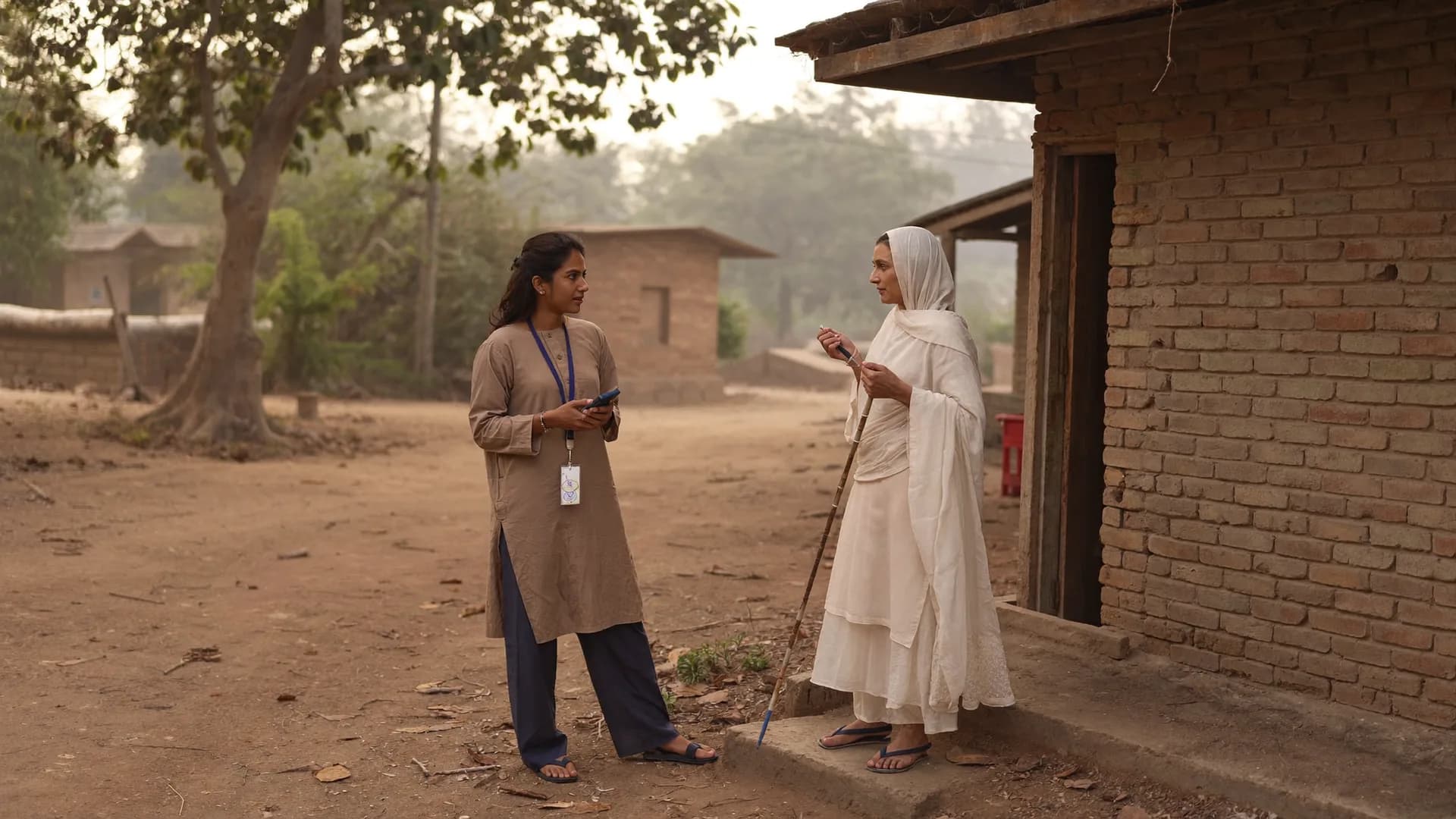
A beneficiary verification tender pays an agency to confirm that listed beneficiaries exist, are eligible and received the benefit. Buyers expect a documented sampling method, consent, proof of each visit such as GPS and time stamps, and a clear process for reporting mismatches without exposing personal data beyond what the scope allows.
Read the data clauses carefully. Verification often involves lists with names and addresses supplied by the department; the contract will say how they may be stored, who may access them and when they must be deleted. Aadhaar-based authentication needs a licensed arrangement and should never be assumed. Price in supervisor revisits and dispute handling, because contested findings are common.
Use this list at the final review before upload.
Scope, methodology and field plans for government bids.
Learn moreSurvey software and field services for departments.
Learn moreWhat a strong baseline methodology includes.
Learn moreDesigns buyers ask for in evaluation RFPs.
Learn moreCost drivers to check before you price a bid.
Learn moreWhen companies must commission impact studies.
Learn moreStraight answers to the questions people ask most about this topic.
Rule 149 of GFR 2017 requires central buyers to procure common-use goods and services available on GeM through GeM. Whether a particular survey or evaluation service falls in an available GeM category depends on the scope. Many consultancy studies are still tendered on the CPPP or the buyer's own portal.
It is a signed declaration a bidder submits in place of an EMD, accepting that it may be suspended from bidding for a period if it withdraws its bid or fails to sign the contract. GFR 2017 allows it; the tender document says whether it is accepted for that procurement.
Only if it meets the stated eligibility. Turnover and similar-work conditions exclude many new firms, although some central tenders relax them for startups and micro and small enterprises. Forming a consortium or working as a field partner to an eligible lead bidder are common routes, where the document allows it.
Technical proposals are scored against published criteria such as experience, methodology and key experts. Bids above the minimum mark have financial bids opened; the lowest price gets full financial marks and others are scored proportionally. The combined weighted score, for example 70 technical and 30 financial, decides the winner.
We support departments and bidders with methodology, survey software and field data collection for specific scopes. We do not claim any empanelment or GeM listing on this page; ask us for current status and documents for a particular tender.

Share the RFP or scope. We will tell you what the methodology, sample and field plan need, and where our software or field teams can help.