
In-person, phone and web interviewing compared for Indian conditions
What is CAPI CATI CAWI? They are the three main computer-assisted ways to collect survey data: CAPI is a face-to-face interview on a tablet or phone, CATI is an interview over the telephone, and CAWI is a questionnaire the respondent fills in online. This guide helps researchers, NGOs and brands choose between them for India.
- Plain definitions of each mode
- A side-by-side comparison table
- Which mode suits which sample
- How to combine modes without mixing up results
- Comes regularly
- Comes sometimes
- Rarely / never
- Don't know
All three put the questionnaire on a computer so skip logic and checks run automatically. They differ in who operates the device and how the respondent is reached: in person, by phone or on the web.
Computer-assisted personal interviewing
- Face to face
- Works offline
- Highest reach in rural areas
Computer-assisted telephone interviewing
- By phone
- Needs a phone sample
- Short interviews work best
Computer-assisted web interviewing
- Self-completed
- Link by SMS, email or app
- Best for online populations
- Comes regularly
- Comes sometimes
- Rarely / never
- Don't know
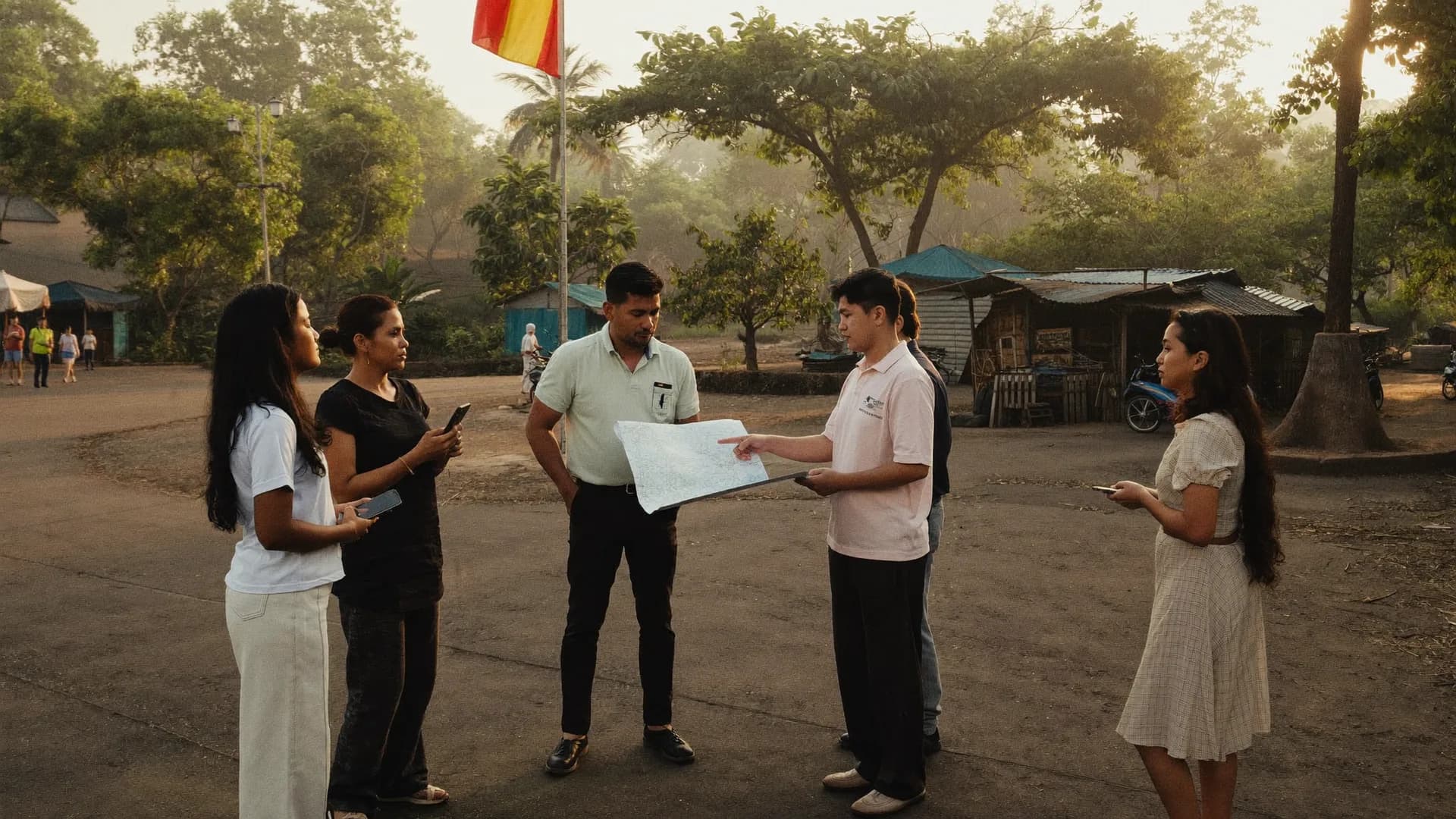
A CAPI survey is a face-to-face interview in which the enumerator records answers on a phone or tablet instead of paper. It makes sense when you need a representative household sample, respondents with low literacy or limited connectivity, long questionnaires, observations, measurements or proof of where and when the interview took place.
In India, CAPI is the default for household surveys, beneficiary verification, baseline and endline studies and most election field research, because phone and internet access still vary by region, gender, age and income. An in-person visit reaches the household member you actually need rather than whoever owns the phone.
The trade-off is cost and time. Travel, enumerator days and supervision make each CAPI interview more expensive than a call or a web response. Good CAPI software pays some of that back by removing data entry, catching errors during the interview and recording GPS, time and duration for verification.
What to look for in CAPI software
These features matter most in Indian fieldwork.
- Full offline operation with later sync
- Skip logic, validations and calculated fields
- Hindi and regional-language forms
- GPS, timestamps and interview duration captured automatically
- Photo capture inside the app, with consent
- Supervisor review and back-check workflows
- Android support on low-cost phones
About Bharat Survey's app
- Built for in-person CAPI on Android
- Works offline in low-network areas
- GPS-verified, time-stamped records
- No dialler or CATI product today
- Phone and web studies scoped per project
CAPI gives the widest reach and strongest verification at the highest cost per interview. CATI is quicker for short studies with a phone sample. CAWI is the lowest cost but only represents people online. Choose by who must be in the sample first, then by budget and time.
| Factor | CAPI (in person) | CATI (phone) | CAWI (web) |
|---|---|---|---|
| Reach in rural India | Strong | Depends on phone access | Weak |
| Needs a list or frame | Area or household listing | Phone numbers | Email, panel or link audience |
| Questionnaire length | Long interviews possible | Short works best | Short to medium |
| Sensitive topics | Private setting needed | Moderate | Self-completion helps |
| Proof of interview | GPS, time, photos | Call logs, recordings with consent | Device and time stamps |
| Relative cost per complete | Highest | Medium | Lowest |
| Speed to results | Slowest | Fast | Fastest |
| Main bias risk | Interviewer effects | Coverage and non-response | Coverage and self-selection |
Relative cost and speed are general patterns, not quotes. Actual figures depend on sample, length, geography and language.
Our view on survey modes
Survey methods fall into two groups: interviewer-administered (face to face, telephone) and self-administered (web, paper, SMS, IVR). CAPI, CATI and CAWI are the computer-assisted versions of the most common of these. Several other methods still have a place in Indian research.
PAPI
IVR surveys
SMS surveys
Focus groups and interviews
Audits and mystery visits
Mixed-mode surveys
Start from the population you must represent, check which modes can reach all of it, then weigh questionnaire length, sensitivity, verification needs, budget and time. If no single mode covers everyone, design a mixed-mode study deliberately rather than switching modes mid-fieldwork.
Answer each question in order.
- Define who the results must represent.
- List which modes can reach every part of that group.
- Check questionnaire length and sensitive modules.
- Decide what proof of interview you need.
- Fit sample size and timeline to the budget.
Mixing modes without mixing up results
People answer differently to an interviewer than to a screen, especially on sensitive or socially desirable questions. When combining CAPI with CATI or CAWI, keep question wording identical, record the mode on every record, and compare results by mode before pooling. Report mode shares in the methodology.
Not the right fit if
- CAWI for rural households or low-literacy respondents
- CATI for 45-minute questionnaires
- CAPI when results are needed within 48 hours nationally
- Any mode used on a list that excludes the people who matter
A good fit if
- CAPI for representative household and beneficiary studies
- CATI for short follow-ups with known respondents
- CAWI for employees, students or online customers
- Mixed-mode when coverage gaps are planned for
CAPI survey software
Offline Android data collection with GPS verification and supervisor review.
Learn moreCATI survey
What telephone interviewing involves and how it is scoped.
Learn moreHow to conduct a baseline survey
Step-by-step baseline design, questionnaire and fieldwork.
Learn moreHow exit polls are conducted
Polling-day survey method, sampling and legal timing.
Learn moreSurvey cost in India
What drives cost per interview across modes.
Learn moreStraight answers to the questions people ask most about this topic.
Which is more accurate, CAPI or CATI?
Neither is accurate by default. CAPI usually gives better coverage of households without reliable phones and supports longer interviews, while CATI can be accurate for populations with a good phone list. Accuracy depends on the sampling frame, response rate, questionnaire and quality checks more than on the mode itself.
Can CAPI surveys work without internet?
Yes. Good CAPI apps store forms and responses on the device and sync when a connection is available. GPS works without mobile data, so location and time can still be captured in areas with no network.
Is CAWI suitable for surveys in rural India?
Rarely on its own. Internet use, device ownership and comfort with self-completed forms vary widely across rural households, by gender and by age. A web-only sample would over-represent connected respondents. It can work for specific online groups, such as teachers or health workers with smartphones.
Does Bharat Survey offer CATI software?
Not at present. Our software is built for in-person CAPI on Android with offline sync and GPS verification. Telephone or web components of a study are discussed and scoped per project rather than sold as a product.
Tell us who you need to reach, the questionnaire length and your timeline. We will suggest a mode and sample design.