Bharat Surveyभारत सर्वे
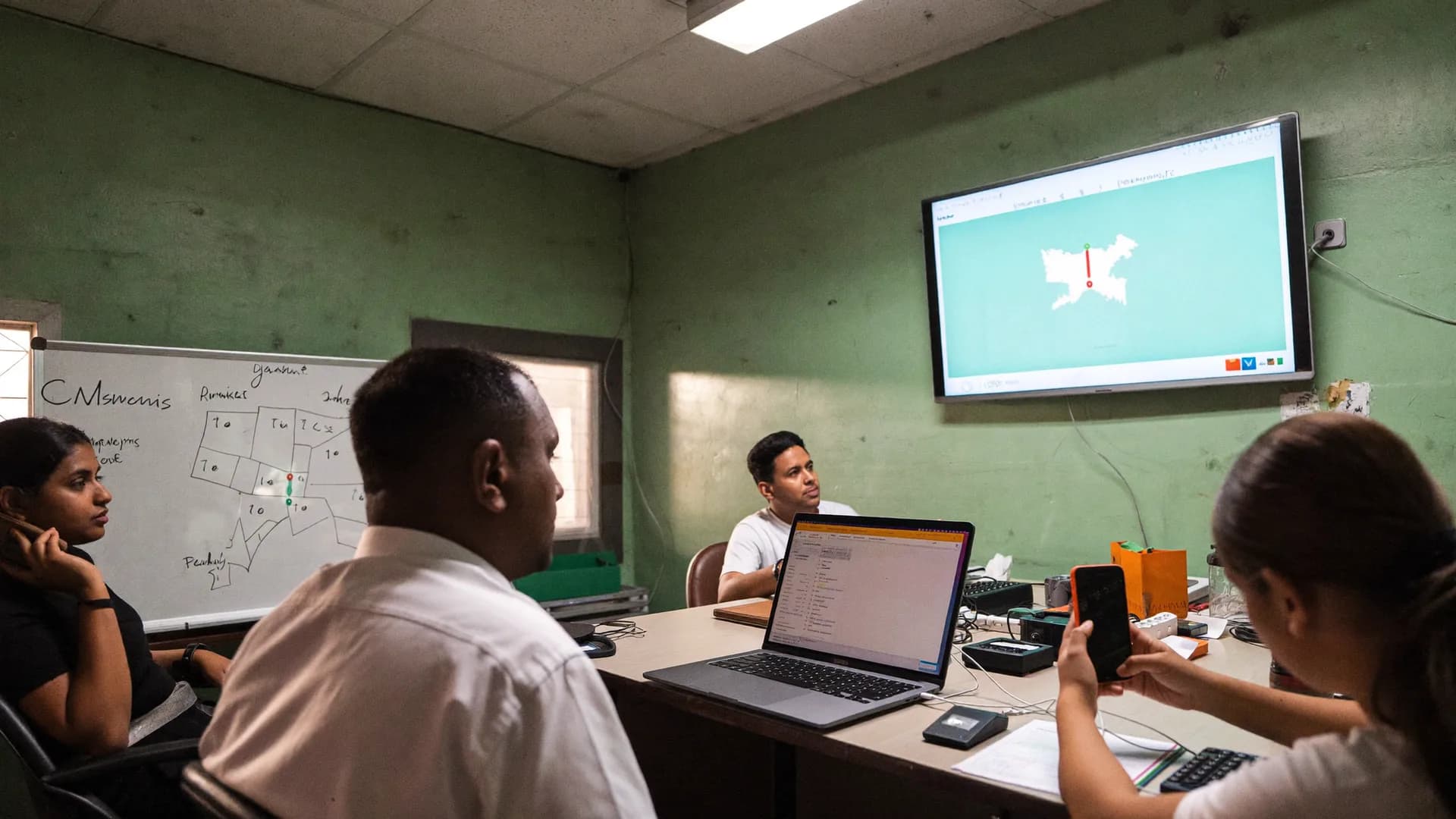
वॉर रूम में लाइव डैशबोर्ड
Guide · Lending operations

Residence and office checks, the CPV workflow, report grades and red flags

What is contact point verification? It is a physical check, done by a field agent for a bank, NBFC or fintech, that a loan or card applicant really lives and works where the application says. This guide is for credit, operations and risk teams who set up or audit CPV, and for agencies that want to run it cleanly.

  • Residence and office verification explained
  • The eight-step CPV workflow
  • Positive, negative and refer-to-credit outcomes
  • Controls that stop fake visits
What is contact point verification in lending?
Survey 5/6 · Photo
Photo of a public issue
Camera · no faces
5 MB → 210 KB · with location/time
SkipTake photo
Location evidence
Survey #BS-0412
  • In areaInside approx. boundary
  • Accuracy±12 m
  • Time09:42 · fresh fix
  • Mock GPSNot detected
  • Interview length11 min
Added to accepted count
Residence verificationOffice verificationNeighbour checkGeo-tagged photosTime-stamped visitsRefer to creditTurnaround timeSampled re-verification
Definition

Contact point verification, or CPV, is a field visit to the address an applicant gave, usually the residence and often the workplace, to confirm the person is reachable there and that stated details are plausible. The agent records observations and photos, then marks the case positive, negative or refer to credit.

CPV sits beside document KYC, credit bureau checks and bank statement analysis. KYC confirms identity from documents under the Reserve Bank of India's KYC directions. CPV answers a different question: is this person actually at this address, and does what we see match what the application says? A valid address proof does not prove that someone lives there today.

Lenders commonly use CPV for personal loans, credit cards, vehicle loans, home loans, business loans and merchant onboarding. Each lender sets its own policy on which products, loan sizes and risk grades need a visit; there is no single regulatory rule that fixes it.

Residence CPV vs office CPV

Residence verification checks that the applicant or a family member confirms residence, how long they have lived there, whether the home is owned or rented, and what the locality looks like. Office or business verification checks that the employer or business exists at the address, that the applicant works there, and that the stated designation or activity is plausible from what the agent can see.

What a CPV report usually records

  • Applicant met, or who was met
  • Years at address, owned or rented
  • Neighbour or guard confirmation
  • Locality and house type
  • Geo-tagged photo of entrance or nameplate
  • Visit time and agent ID
  • Agent remarks and outcome
Workflow

A typical CPV process runs in eight steps from case allocation to credit decision, usually within a turnaround time the lender sets. The steps below describe common practice; your policy may add or merge stages.

01

Case triggered by the lender

The loan origination system sends the case with applicant name, address, product and required checks to the verification agency.

  • Residence, office or both
  • Target turnaround time
Hello, Ram Kumar
Today's work
Shift on
Assignment
Gram Panchayat Barauli
Target 40 homes14 done15 done16 done17 done
Shift
On · 2:14 h
Sync
6 phone · 8 server
Today's homes
  • Home 15 · RamlalDone
  • Home 16 · SunitaDone
  • Home 17 · LockedRevisit
  • Home 18 · MohanFilling…
#BS-0413 synced to server
Start new survey

02

Allocate to a field agent by area

The agency's supervisor assigns the case to an agent covering that pin code, checking there is no link between agent and applicant.

  • Pin-code based routing
  • Conflict check
bharatsurvey.org/app/172/live
Ram Kumar · shift on
26.8467 N · 80.9462 E · ±12 m
14
Received
12
Accepted
1
Review
1
Outside
03

Visit the address unannounced where policy allows

The agent reaches the address, locates the house or office and notes landmarks. Calling ahead is limited because it allows staging.

  • Landmark notes
  • Arrival time recorded
Visit the address unannounced where policy allows
04

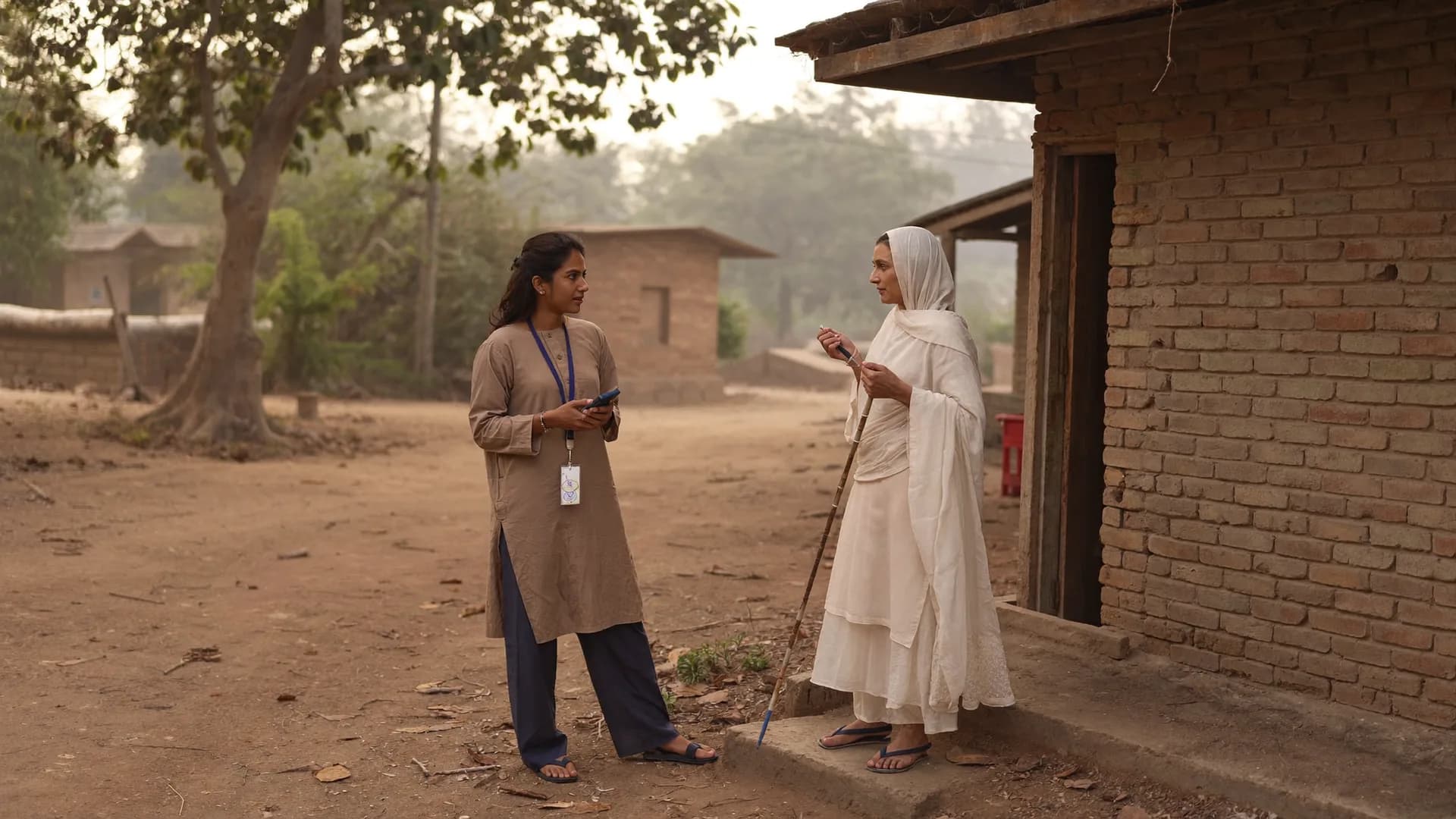
Meet the applicant or a verifiable person

The agent confirms identity, residence period and key details politely, without collecting documents the policy does not ask for.

  • Who was met and relation
  • Structured questions
Survey 3/6 · AmenitiesOffline
How is drinking water in your area?
  • Comes regularly
  • Comes sometimes
  • Rarely / never
  • Don't know
✓ Section saved on phone · autosave
BackNext
05

Confirm with a neighbour or guard

A third-party confirmation reduces the chance that someone else is posing at a borrowed address.

  • Name withheld if requested
  • Answer recorded as given
Confirm with a neighbour or guard
06

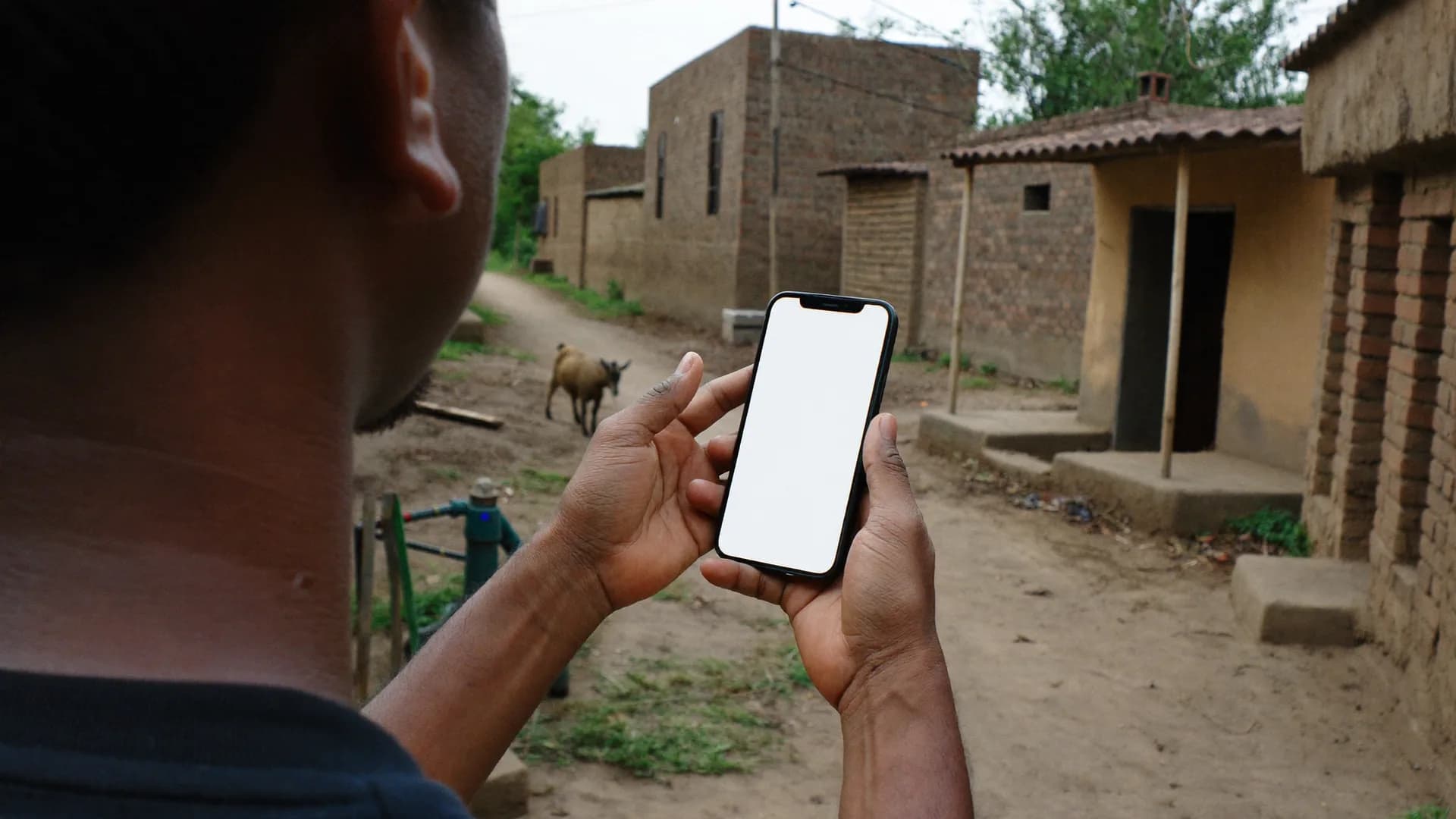
Capture photo and location evidence

Geo-tagged, time-stamped photos of the entrance or nameplate are taken with consent, never of family members without permission.

  • GPS accuracy stored
  • No gallery uploads
Survey 5/6 · Photo
Photo of a public issue
Camera · no faces
5 MB → 210 KB · with location/time
SkipTake photo
07

Submit the report and outcome

The agent marks positive, negative or refer to credit with remarks. A supervisor reviews flagged or out-of-pattern cases.

  • Mandatory remarks for negatives
  • Supervisor queue
Location evidence
Survey #BS-0412
  • In areaInside approx. boundary
  • Accuracy±12 m
  • Time09:42 · fresh fix
  • Mock GPSNot detected
  • Interview length11 min
Added to accepted count
08

Credit decision and sampled re-check

The lender's credit team reads the report with other checks. A sample of positives is re-verified by a different agent to catch desk reports.

  • Random re-verification
  • Agent scorecards
Constituency 172 · Survey round 2Updated 12s ago · sample
3,000
Target homes
2,184
Visits
1,962
Completed
1,871
Accepted
Daily accepted surveysLast 12 days
Reading reports

Most lenders use three outcomes. Positive means the address and key details were confirmed. Negative means they were contradicted or the person is unknown there. Refer to credit means the visit found something ambiguous that a credit officer should weigh, such as a recent move or a locked house.

Common contact point verification outcomes and follow-up
OutcomeTypical findingUsual next step
PositiveApplicant or family met, residence period and details match, neighbour confirmsProceed with other checks
NegativeUnknown at address, address does not exist, details clearly falseDecline or escalate to fraud unit
Refer to creditRecently shifted, house locked on repeat visits, partial mismatchCredit officer review, possible re-visit
UntraceableIncomplete address, area unreachableAsk applicant for clarification

Labels differ by lender. Use the definitions in your own credit policy.

Our view on CPV

Red flags

Most CPV failures come from visits that did not happen, visits to the wrong place, or answers given by someone coached by the applicant. Each has a practical control.

Desk reports without a visit

Control: location proof
Agents under volume pressure fill reports from a phone call. Control: GPS and time captured by the app at submission, not typed in, plus sampled re-visits.

Staged addresses

Control: third-party check
Applicants use a relative's or friend's home for one day. Control: neighbour confirmation, residence period questions and checks against other addresses in the file.

Agent-applicant collusion

Control: rotation
A local agent knows the applicant or the loan agent. Control: allocation rules, agent rotation and patterns reviewed by supervisors.

Reused or old photos

Control: in-app capture
Photos taken earlier or pulled from the gallery. Control: in-app camera only, with capture time and location stamped on the record.
Setting up

Start with a written policy on which cases need which visits, a standard report form, clear outcome definitions, a turnaround target and a sampled re-verification rule. Then measure agencies on accuracy found in re-checks, not only on speed.

Setup checklist for lenders

Work through these before onboarding a verification agency.

  1. Define products and risk grades that need residence or office CPV.
  2. Write one report form with mandatory fields and remarks.
  3. Fix outcome definitions and when to refer to credit.
  4. Require app-captured GPS, time and photos on every visit.
  5. Set a re-verification sample and who performs it.
  6. Agree data retention and deletion periods with the agency.
  7. Review agent-level negative rates and turnaround monthly.

Privacy and conduct

Agents should identify themselves, explain the visit, avoid discussing the loan with neighbours beyond confirming residence, and not photograph people without consent. Keep CPV data within the lender's outsourcing and data protection obligations, and delete it on schedule.

Not the right fit if

  • Identity verification from KYC documents
  • Aadhaar eKYC, which needs a licensed partner
  • Credit bureau and income assessment
  • Legal and technical checks on property for home loans

A good fit if

  • Confirming an applicant is reachable at an address
  • Spotting staged or fictitious addresses
  • Checking a business visibly operates
  • Adding geo-tagged evidence to the credit file
FAQ

Straight answers to the questions people ask most about this topic.

Is CPV required by the RBI?

The RBI's KYC directions govern customer identification and due diligence, but they do not prescribe a field visit for every loan. Contact point verification is a risk control that lenders choose under their own credit and outsourcing policies, usually for specific products, amounts or risk profiles.

How long does contact point verification take?

Turnaround is set by the lender and depends on location. Urban residence visits are often completed within a day or two of allocation; rural, remote or repeat visits for locked houses take longer. Measure turnaround together with re-verification accuracy, so agencies are not rewarded for fast desk reports.

What happens if the applicant is not at home?

Agents typically confirm residence with a family member or neighbour and may schedule a repeat visit. If the house is locked across visits and no one can confirm residence, many lenders mark the case refer to credit rather than negative, so a credit officer can decide.

Can CPV be done by phone?

A phone call can confirm details, and some lenders use tele-verification as an extra check. It cannot confirm that a person lives at an address, which is the purpose of a contact point visit. Treat phone checks as a supplement, not a replacement.

शाम के समय कस्बे का हवाई दृश्य
India Nationwide, Hindi-first

Tell us the products, pin codes and monthly volumes. We will explain how our field teams and app would handle them.