
Does the beneficiary exist here?
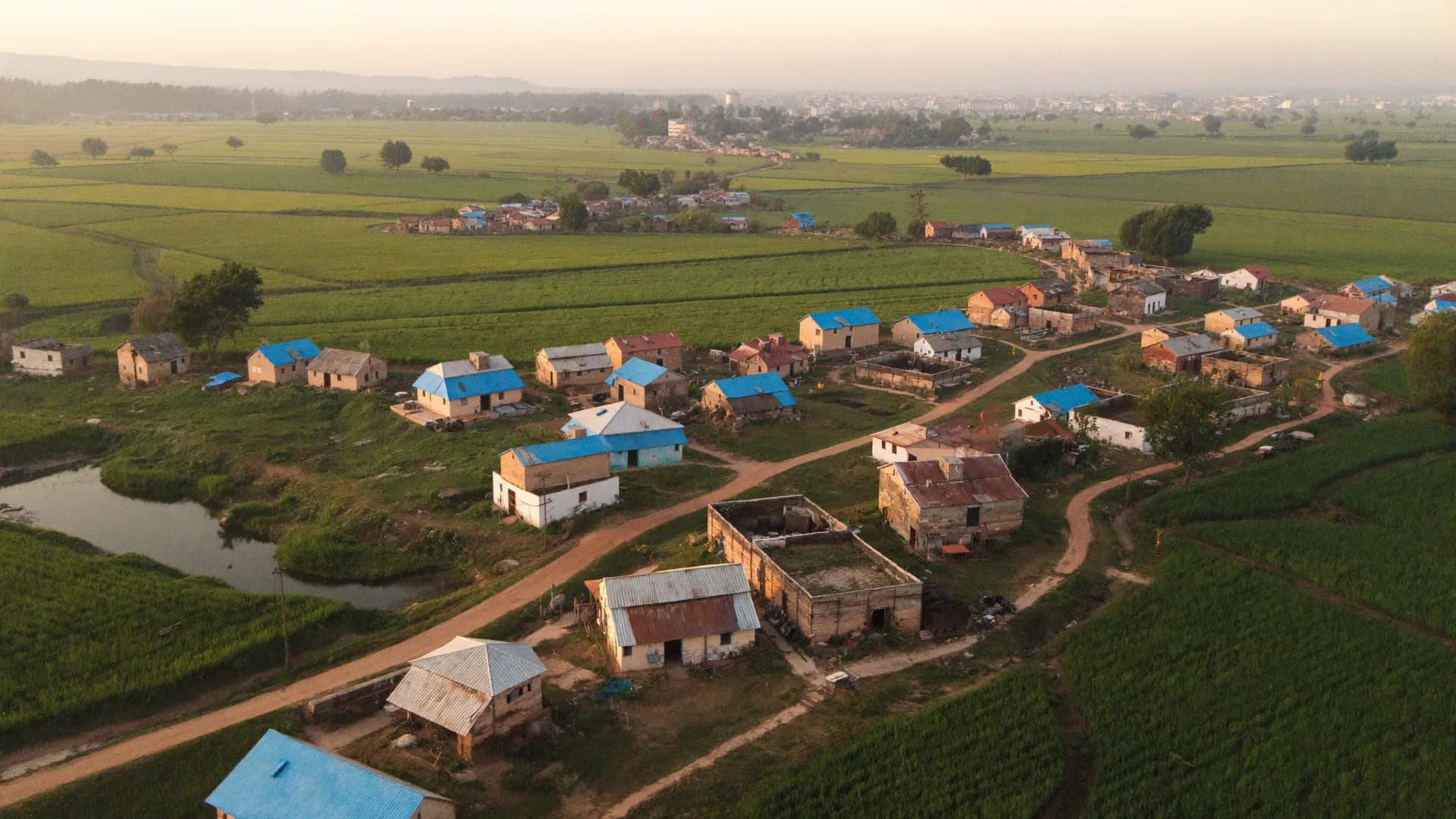
The enumerator locates the household from the list address, records whether the named person lives there, has moved or has died, and captures location evidence of the visit.
Is the person on the list real, eligible and actually receiving the benefit?
A beneficiary verification survey checks, household by household, whether the people on a scheme list exist, meet the eligibility rules and received what the records say. Bharat Survey runs these for state departments, district administrations and implementing agencies: we draw a random sample from your list, send trained enumerators to the doorstep with an offline app, capture GPS, time and consented photos, and return a verified list with every mismatch explained. We support official processes like e-KYC and seeding drives; we do not replace them.
Deduplication by database matching catches the same Aadhaar or bank account twice. It cannot catch two genuinely different records for one household, a beneficiary who died, or a name added from a family that has migrated. A field survey on a sample of flagged and unflagged records shows how much of the problem a database match misses.
We draw a stratified random sample from the list you share, with extra draws from records your system has already flagged. Enumerators do not know which records were flagged. That keeps the visit neutral and lets the report compare the two groups honestly.
A record-level file with the visit outcome for every sampled beneficiary, GPS and time of the visit, a photo where consent was given, and a summary of error rates by district and by type of error, with the sample size behind each figure.
The field method stays the same; the eligibility questions and evidence change by scheme.
Ration card e-KYC is completed through the official biometric process at the fair price shop or designated centres. What an outside agency can add is the household visit: finding members who have not completed e-KYC, confirming whether they live there, and recording why they have not come forward. Elderly members, migrants and people whose fingerprints fail are common reasons.
Aadhaar authentication can only be performed through licensed entities under UIDAI rules. Our enumerators do not scan fingerprints or collect Aadhaar numbers. They record the household's status and direct members to the official channel, which keeps the verification lawful and the data exposure small.
Some departments need households identified before a scheme list is drawn up. As a survey agency for poverty estimation and beneficiary identification, we run listing and socio-economic questionnaires across sampled or full villages, mapped to LGD codes so results roll up to block and district.
The same field set-up lets us act as a data collection agency for poverty estimation and beneficiary identification, or as a third party evaluation agency for poverty estimation and beneficiary identification when a department wants an independent check on a list another team prepared.
Household, facility and scheme surveys for departments.
Learn moreGovernment survey services explained in Hindi.
Learn moreHow survey services are usually procured on GeM.
Learn moreWhat empanelment processes typically ask for.
Learn moreIndependent evaluation of whole schemes.
Learn moreStraight answers to the questions people ask most about this topic.
It depends on the size of the list, the error rate you expect and whether you need separate figures per district or block. Scheme guidelines sometimes set a share, such as the roughly 5% checking suggested under PM-KISAN. We share a sample calculation that meets the guideline and gives estimates precise enough to act on.
No. We match records using the scheme ID or list serial number you share. Aadhaar numbers are not captured in our forms, and we do not perform biometric or OTP authentication, which only licensed entities may do under UIDAI rules.
Our report gives evidence; the decision stays with the competent authority under the scheme's rules. We recommend that any proposed deletion is followed by a notice and a chance for the household to respond, and our data includes the visit details needed for that follow-up.
Every record carries GPS location, time and interview duration from the app, and visits outside the assigned village are flagged. Supervisors independently re-visit a share of households. Records failing these checks are not counted as verified.
The list you share is loaded only for the assignment, visible to enumerators just for their allotted households, encrypted on the device until sync, and deleted from our systems when you instruct us.
Tell us the scheme, districts and list size. We will propose a sample, a questionnaire and a timeline.