
One headline measure
OverallOverall satisfaction on a labelled 5-point scale, or likelihood to recommend on 0–10. Keep the same measure across rounds.

From objectives to a frozen, translated and piloted instrument
This guide explains how to design a survey questionnaire for households, customers, employees or programme beneficiaries in India. You will turn objectives into indicators, write neutral questions, order modules, translate and back-translate, add skip logic and pilot test before fieldwork. The result is an instrument enumerators can read aloud and analysts can trust.

Hello, I am Ram Kumar. This survey is run by Sample Organisation. Purpose: to learn about amenities in your area. It is voluntary, and you can say no at any time.
A good survey questionnaire asks only what the analysis needs, in words every respondent understands the same way, in an order that builds trust before sensitive topics. Each question maps to an objective, has a fixed recall period and clear answer options, and has been tested on real respondents before the main fieldwork begins.
Most questionnaire problems are visible only in the field. A question that reads well in an office in English can become ambiguous in Bhojpuri or Tamil, too long when spoken aloud, or embarrassing when a neighbour is listening. Designing for spoken delivery by an enumerator is different from designing a form someone fills in alone.
Start from the decisions the data will inform, not from a list of interesting topics. If nobody can say which table a question will feed, cut it. Every extra minute costs field money and lowers attention for the questions that matter.
Follow these steps in order. Skipping the pilot or the translation check is where most instruments fail.
Hello, I am Ram Kumar. This survey is run by Sample Organisation. Purpose: to learn about amenities in your area. It is voluntary, and you can say no at any time.
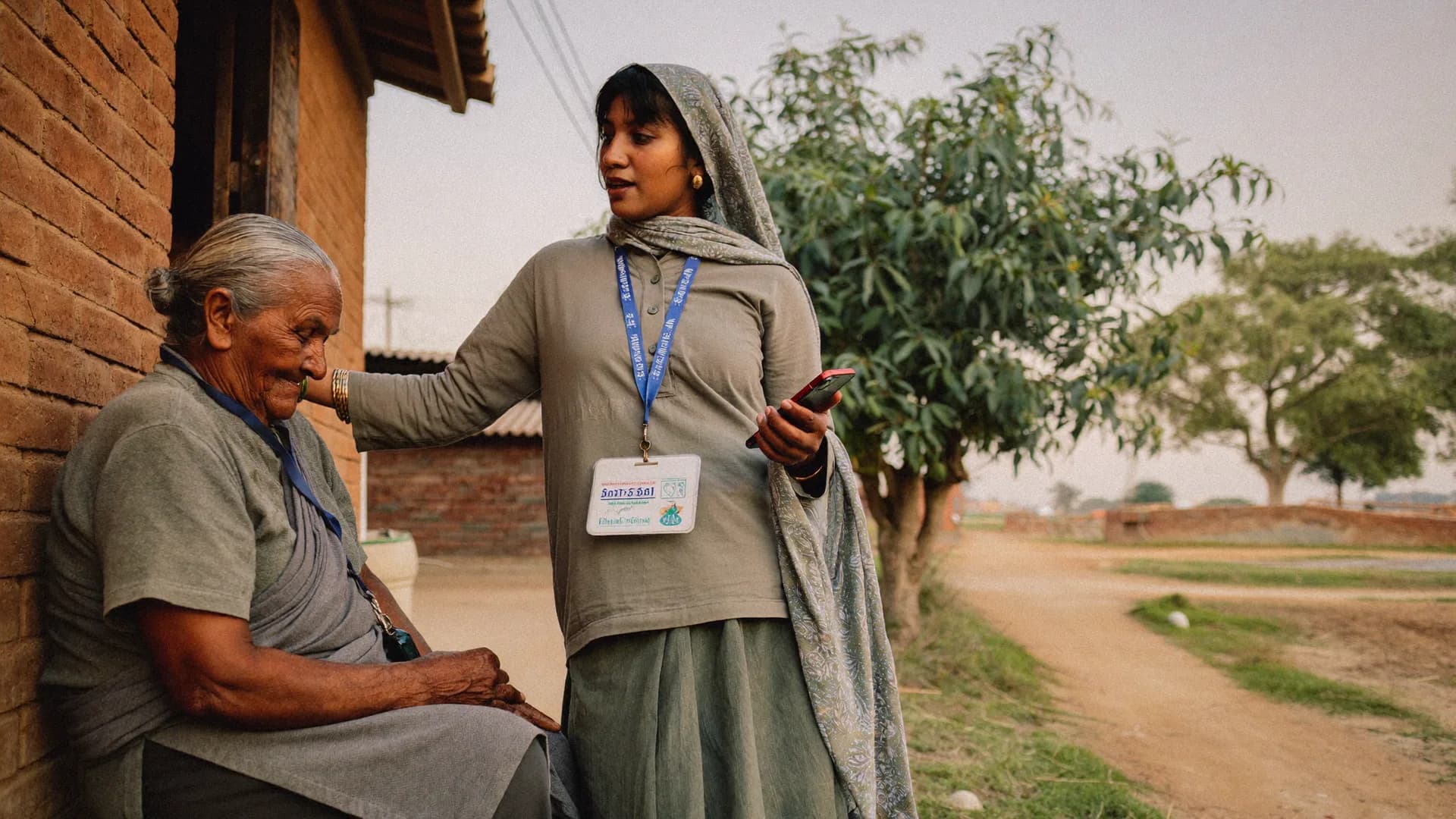
Hello, I am Ram Kumar. This survey is run by Sample Organisation. Purpose: to learn about amenities in your area. It is voluntary, and you can say no at any time.
Most bad questions break one of a few rules. Check every draft question against this table.
| Rule | Weak question | Better question |
|---|---|---|
| One idea per question | Is the ration shop clean and open on time? | Split into two: cleanliness, then opening hours |
| Fixed recall period | Do you often visit the health centre? | In the last 30 days, how many times did you visit the health centre? |
| Neutral wording | Don't you agree the new road has helped? | Has the new road made travel to the market easier, harder or no different? |
| Answer options that cover all cases | Income: below 5,000 / 5,000–10,000 | Add higher bands, "no income" and "refused" |
| Words respondents use | What is your household's primary occupation? | What work brings in most of your household's money? |
| Avoid assumed behaviour | Which app do you use to pay bills? | Do you pay any bills on a phone? If yes, which app? |
Read every question aloud. If the enumerator needs to explain it, rewrite it.
Pilot testing a survey instrument in India means interviewing people similar to your sample, in the real languages and settings, before fieldwork. It checks timing, comprehension, translation, skip logic, sensitive questions and device performance. Plan at least one round of revision and re-test any question you change substantially.
A desk review is not a pilot. Use trained enumerators, the programmed app and real households or customers outside the sample.
Many "don't know" answers, long pauses, respondents asking for the question again, enumerators paraphrasing differently, or answers piling into one option all signal a problem. So do questions that make respondents look at family members before answering; move those later or find a private setting.
A household survey questionnaire in India usually opens with identification and consent, then a household roster, housing and assets, livelihoods, the study's core module and access to services. Using definitions from national surveys, such as the NSS household and NFHS modules, makes your figures easier to compare with official estimates.
Adapt the order so rapport is built before income or health questions.
Decide in advance who the respondent is for each module. The household head may answer the roster, but questions about a woman's health or a child's schooling should go to the person who knows. Record who answered each module so analysts can check consistency.
A socio economic survey questionnaire measures a household's economic position and social profile so that results can be broken down by groups. Keep categories aligned with official classifications, and ask sensitive identity questions only when the analysis needs them and consent covers them.
Customer satisfaction survey questions should measure a specific experience soon after it happened, then ask what drove the rating. A short overall score plus a few attribute ratings and one open reason is usually more useful than a long battery of agree-disagree items.
Employee engagement survey questions cover how people feel about their work, manager, growth and workplace. Anonymity decides honesty: report only groups large enough that no one can be identified, offer the survey in the languages staff speak, and tell employees in advance what will happen with the results.
These are the errors that show up again and again when a dataset reaches analysis.
From questionnaire to verified data on the Bharat Survey platform.
Learn moreयही प्रक्रिया हिंदी में।
Learn moreIndicators, sampling and a household questionnaire outline.
Learn moreA hospital feedback questionnaire outline.
Learn moreHow mode changes question design.
Learn moreWhy interview length drives the budget.
Learn moreStraight answers to the questions people ask most about this topic.
As short as the analysis allows. Many household surveys run 30 to 45 minutes, customer surveys under 10 and phone surveys 10 to 15. Time it in the pilot, not on paper. If it runs long, cut questions that do not feed a planned table before you cut sample size.
For spoken interviews, a labelled 5-point scale is easier because respondents can remember every option. Longer numeric scales work better in written or online surveys. Whatever you choose, keep it the same across rounds so results can be compared over time.
Enough to see each skip path and each language used, often a few dozen interviews across different respondent types. The goal is to find problems, not to estimate results. If you make major changes, run a smaller second pilot on the revised questions.
Yes, and it is often wise. Questions from national surveys have been tested at scale, and reusing their definitions lets you compare your results with official figures. Check the recall period and categories match, and credit the source in your methodology note.
A translator fluent in the local spoken variety, not only the formal language, followed by an independent back-translation into English. Field supervisors from the area should review the final wording, because they know which words respondents actually use.

Send it with your objectives. We will review wording, flow and length, then program, translate and pilot it for your field area.